
What Size Industrial Diesel Genset Does Your Facility Actually Need?
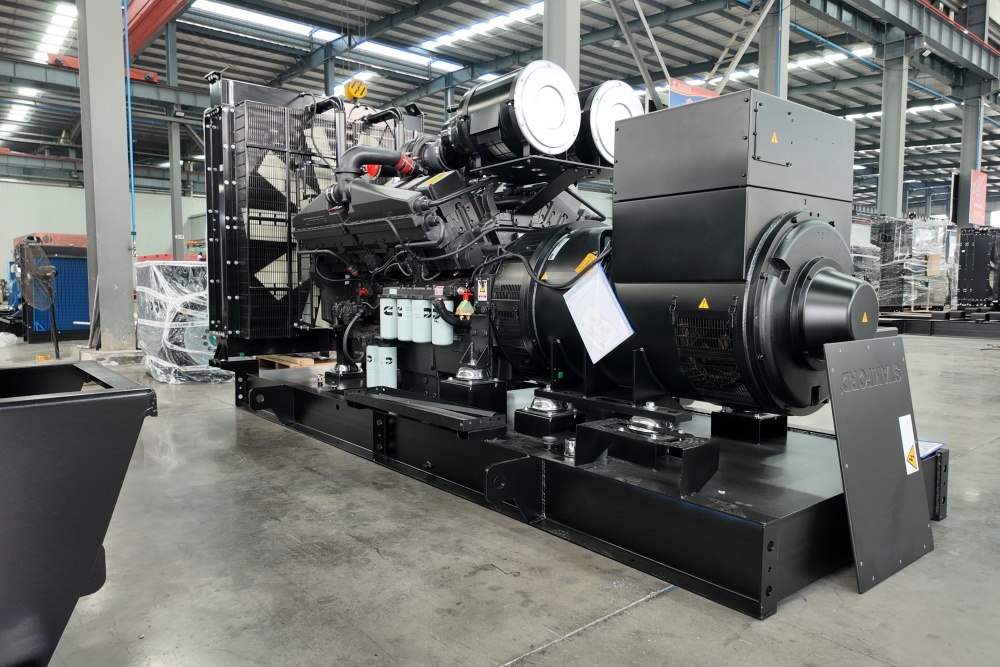
To calculate your required diesel genset capacity, multiply the sum of all concurrently running steady-state loads by a 1.25 safety factor, then add the sum of the top 25% of motor inrush currents, ensuring the total alternator kVA handles the resulting instantaneous voltage dip within a 15% tolerance. A 500kW unit running at a 350kW load maintains optimal combustion efficiency, but sizing incorrectly often causes white smoke and cylinder glazing. Precise sizing necessitates analyzing the transient response capability of the engine’s governor system to prevent frequency deviation exceeding 2% during full-load block steps.
Engineering teams often find that the initial procurement cost of a diesel genset represents only 30% of the total life-cycle expense over a 20-year operational window. Maintenance logs from 2024 indicate that units sized exactly to peak demand rather than average load consume 18% more fuel annually during idling periods.
Engine cooling systems must dissipate roughly 2,500 BTU per minute per 100 horsepower of output. Without proper radiator sizing for a specific site’s maximum ambient temperature, derating requirements climb by 4% for every 10 degrees Fahrenheit above the engine's design baseline.
High-inertia loads, such as large centrifugal pumps or industrial fans, require a generator with an oversize alternator to manage the high kVA demand during startup sequences. If a motor draws 600 amperes at full load, it might demand 3,600 amperes for 0.5 seconds upon activation, which forces the generator’s automatic voltage regulator to work overtime.
| Load Component | Power Factor | Surge Multiplier |
| Lighting (LED) | 0.95 | 1.0x |
| Resistive Heaters | 1.00 | 1.0x |
| Induction Motors | 0.85 | 6.0x |
| Variable Frequency Drives | 0.90 | 1.2x |
When an electrical system contains a high concentration of nonlinear loads, the resulting harmonic distortion can overheat the generator windings. Engineers typically specify an oversize stator if the total harmonic distortion (THD) exceeds 12% to ensure the copper windings do not reach critical thermal failure temperatures.
Modern fuel injection systems operate at pressures exceeding 20,000 psi to atomize fuel efficiently. Using a generator with an electronic governor allows for a recovery time of less than 3 seconds when the system experiences a 50% load step.
Air intake quality impacts engine longevity, as particulate matter enters cylinders and causes abrasive wear on piston rings. Data from a 2025 assessment of 50 remote industrial sites shows that implementing heavy-duty air filtration extends the interval between cylinder head overhauls by 25%.
-
Install vibration isolators to prevent frame fatigue.
-
Monitor exhaust backpressure to ensure it stays below 20 inches of water column.
-
Check battery cold cranking amps against the manufacturer’s minimum startup requirements.
-
Verify the fuel storage tank provides at least 24 hours of runtime at 75% load.
Selecting an engine that requires an oil change every 250 hours instead of every 500 hours increases the yearly technician labor costs by 100%. Site supervisors often ignore the auxiliary power requirements of the control panels, battery chargers, and space heaters, which consume roughly 2 to 5 kilowatts continuously.
Lubricating oil viscosity changes with temperature, affecting the starter motor's ability to turn the crankshaft. Engines located in climates reaching below 0 degrees Fahrenheit require block heaters rated at 1,500 watts or more to guarantee starts within 10 seconds.
Frequency stability depends on the engine’s ability to maintain a constant rotational speed of 1,800 RPM for 60Hz systems. A deviation of just 3% in frequency leads to sluggish performance in industrial motors and potential synchronization failures in sensitive digital equipment.
Engineers must account for elevation when specifying the unit, as air density decreases by approximately 3.5% per 1,000 feet of altitude. A unit rated for 1,000kW at sea level produces only 860kW at 4,000 feet, which often leads to unexpected power deficits during site commissioning.
-
100kW+ systems need high-capacity coolant heaters.
-
Standard mufflers often require 10 feet of clearance from walls.
-
Exhaust pipe diameter must increase with run length to minimize backpressure.
-
Fuel piping should utilize fire-rated materials for indoor installations.
Calculating the total harmonic distortion levels during the initial design phase prevents equipment interference. Most standby systems are designed for 80% to 100% of their nameplate rating for the duration of the emergency event.
Fuel consumption rates for a 500kW unit typically follow a linear curve, burning approximately 35 gallons per hour at full load. Reducing the load to 50% only drops consumption to 20 gallons per hour, demonstrating why load matching is necessary.
Exhaust gas temperature monitoring provides early detection of incomplete combustion. If temperatures remain below 400 degrees Fahrenheit, the engine is likely underloaded and accumulating unburnt fuel deposits within the exhaust manifold.
Site planners must consider the physical footprint of the unit plus a 3-foot clearance for maintenance access. Total weight for a 500kW enclosure often exceeds 15,000 pounds, requiring a concrete pad designed for static load support and vibration mitigation.
Standardizing the control interface across all units simplifies operator training. Systems that provide remote telemetry allow for real-time monitoring of oil pressure, coolant temperature, and fuel levels via Ethernet or cellular connections.
-
Monthly no-load runs confirm battery charge levels.
-
Quarterly load-bank testing verifies peak capacity.
-
Annual fluid analysis detects engine wear particles.
-
Bi-annual alternator insulation resistance testing.
When sizing for an entire facility, account for the diversity factor of the connected loads. The sum of all circuit breakers is rarely the true operating load, as many systems do not run at the same time throughout a 24-hour cycle.
Using data from building management systems helps in creating an accurate load profile. Reviewing electrical bills for a 12-month period reveals the peak demand values required for calculating the generator’s capacity needs.
Proper exhaust discharge paths must account for prevailing winds to prevent fumes from entering building air intake vents. Using high-temperature rated stainless steel flexible connectors prevents vibration transmission to the building structure.
Total noise mitigation strategies often include sound-attenuating enclosures. An industrial unit operating at full load generates approximately 85 decibels at 7 meters, which requires sound-dampening baffles if the site resides near commercial zones.
When selecting between open-skid and enclosed models, consider the environment. Enclosures protect the engine from dust, moisture, and debris, which significantly reduces the frequency of cleaning the radiator fins and air filters.
The choice of fuel storage type—whether day tanks or base tanks—depends on site logistics. Double-walled tanks with leak detection sensors are mandatory in many regions to prevent environmental contamination from fuel spills.
Final commissioning involves a full load-bank test to 110% of the unit’s rating. This ensures that the engine, alternator, and control systems function as designed before handing over the power responsibility to the facility operators.